ĀRK Vedic Futurism
The whole of creation is made of five gems
Why you need us?

Five gems.One creation.Take one away, and it breaks.
What do you want to build?
Type anything: a spaceship, a book, a company, a family. Then drag the five gems onto the screen and see the part each one plays.
- Drop a gem here
What do you want to build? Type it below and press Enter, or keep the example.
Everything you build in life, the gems have a role to play.
The texts that teach this are here. But there is no system.
So we are here, to help you build that system.
ĀRKThe films
What ĀRK does, in interactive guides
Short films that walk through the site the way you would use it. Drag, swipe or use the arrows to choose one.
The five gems terminal
Type what you want to build, then drag in the five gems and see the part each one plays.
You know us to know yourself.

Body is an art.
Body is a temple.
Because it has a system.
But it’s also complex.
So, a system was created to understand it.

























The five gems can also have a system!
We help you to build that system.
And help humans be the best species in the universe.
We call it “the next epoch of civilization.”
Book One of The ĀRK Cycle · The Seventh Day
When the network that holds a civilisation’s memory begins erasing every original text, a young mechanic finds that her village’s grain silo hides the starship her ancestors used to carry the texts between worlds. She has seven days to fly it past a solar storm.

ĀRKBooks
The Seventh Day
Book One arrives on 20 December 2026.
The world is invented. The texts are not.
The people and places in the story are made up. Every verse they read is real, quoted exactly and given its address.
- Length
- About 200 pages
- Paperback
- 5.5 × 8.5 in
- Ebook
- Kindle
- Launch
- 20 December 2026, Gītā Jayantī
But that’s not all we do!
ĀRKGallery
Today’s wallpaper
A different one every day, and each one starts with a verse.
तद्विद्धि प्रणिपातेन परिप्रश्नेन सेवया । उपदेक्ष्यन्ति ते ज्ञानं ज्ञानिनस्तत्त्वदर्शिनः ॥ ३४ ॥
tad viddhi praṇipātena paripraśnena sevayā | upadekṣyanti te jñānaṁ jñāninas tattva-darśinaḥ ||
Just try to learn the truth by approaching a spiritual master. Inquire from him submissively and render service unto him. The self-realized souls can impart knowledge unto you because they have seen the truth.
Source: Bhagavad-gītā 4.34
ĀRKReader
A permanent address for every verse
Verse numbers change from one edition to the next, and web links break. ĀRK gives each verse one address that never changes.
Open it and you get the verse, with each commentary shown under its author’s name.
One text is fully mapped so far. More are on the way.
urn:arka:npt.2.1A verse in the Reader
उग्रं वीरं महाविष्णुं ज्वलन्तं सर्वतोमुखम् । नृसिंहं भीषणं भद्रं मृत्युर्मृत्युं नमाम्यहम् ॥
ugraṁ vīraṁ mahāviṣṇuṁ jvalantaṁ sarvatomukham | nṛsiṁhaṁ bhīṣaṇaṁ bhadraṁ mṛtyur-mṛtyuṁ namāmy aham ||
I offer my reverent obeisances unto the fierce (ugram) and heroic (vīram) Mahāviṣṇu, the blazing One whose countenance blazes in all directions (jvalantaṁ sarvatomukham), the terrifying yet auspicious Nṛsiṁha (bhīṣaṇaṁ bhadram), who is the Death of death itself (mṛtyur-mṛtyum).
CommentaryCited versesDictionary
ĀRKWhy
Why it matters
Summaries replace the text
A summary keeps one reading of a verse and loses the verse itself.
Try the ReaderEditions renumber the verses
The same verse can carry two different numbers in two printed editions.
Read the essayLinks die
By 2014, one in five digital citations in science had already gone dark.
Read the essay
Meet our crest
Every part of our crest comes from a verse.
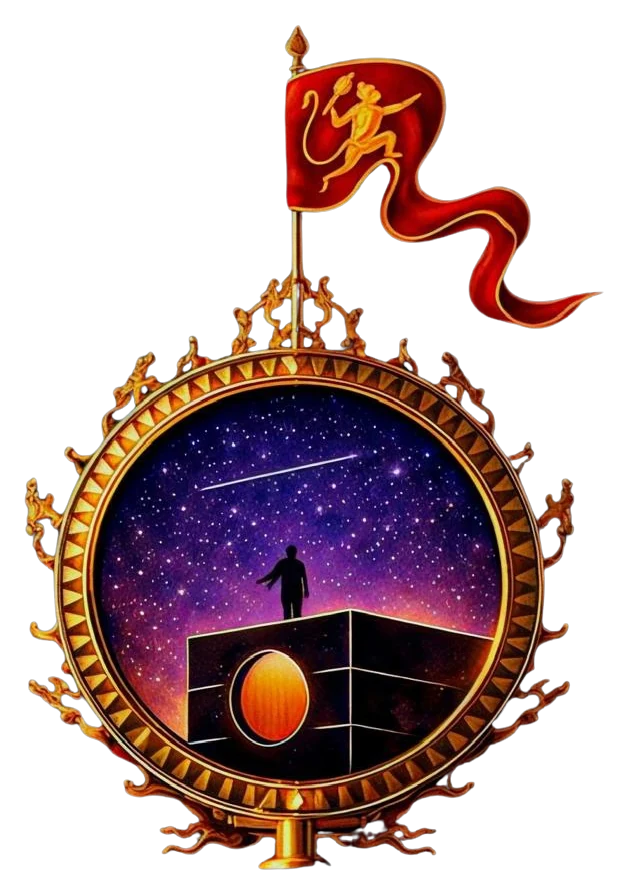
- Sudarśana Chakra the disc of the Supreme Lord Śrīmad-Bhāgavatam 6.8.23
- Kapi-dhvajaḥ Hanumān on the banner: sign of victory Bhagavad-gītā 1.20, purport
- Meteoric Alignment a meteor falling with the advance: victory Bṛhat Saṁhitā 33.30
- Indradhvaja the flag flies to the right: auspiciousness Bṛhat Saṁhitā; Mahābhārata 5.81.24
- Athāto Brahma Jijñāsā the seeker under the night sky: inquiry into the Absolute Truth Śrīmad-Bhāgavatam 1.1.1 and Bhagavad-gītā 4.2, purports
ĀRK is made by Aesthova Private Limited, part of Āroha Omnis Corp, in Bhubaneswar, India.
ĀRKBy email
Stay updated with ĀRK
An email whenever something new is published: a book, an essay, a wallpaper or a film.