How the art is made
Four rules hold across every wallpaper here. Each one is visible in the pictures, and each one decides something about the site around them.
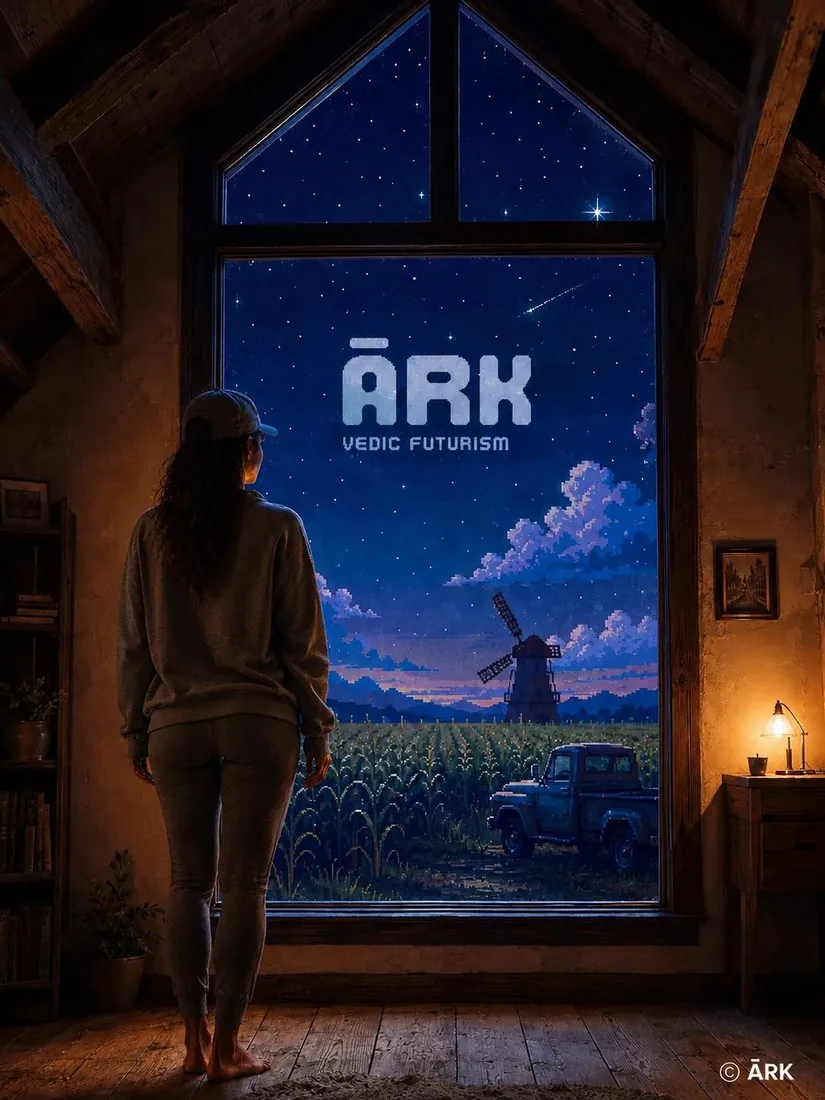
The person is never the subject
Nobody in these frames is looking back at you. Each figure stands small and turned outward, so that what you are looking at is not a person but what that person has stopped to look at.
On the site: no faces in the chrome, no testimonial grid, no founder portrait. The reader is the figure in the frame; the interface is the window.
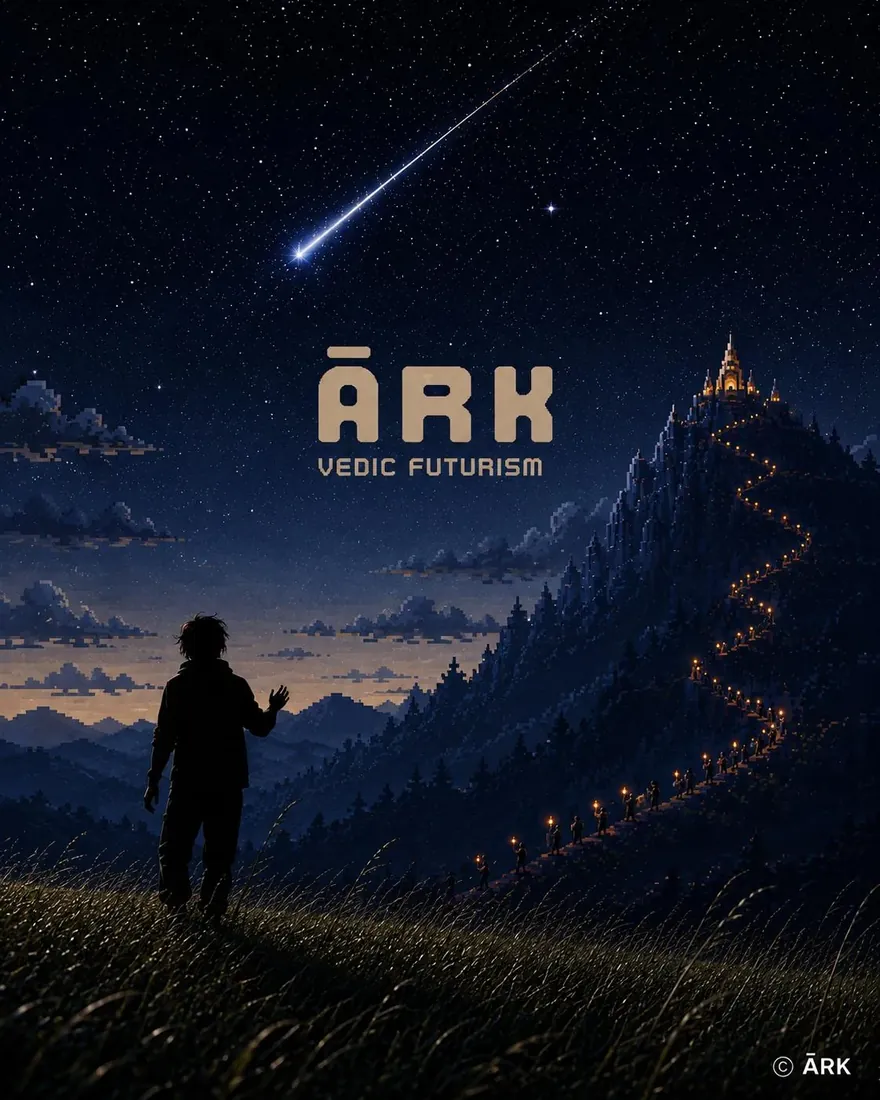
A single warm source in a cold field
Almost every frame is held in cold shadow and broken by one warm light: a lamp, a torch, an orange sail, a flashlight held in someone’s teeth. Warmth is rationed to the exact place where attention is being paid.
On the site: amber is the only accent and it is rationed. One ember object per viewport, the primary action or the live datum. Never two.
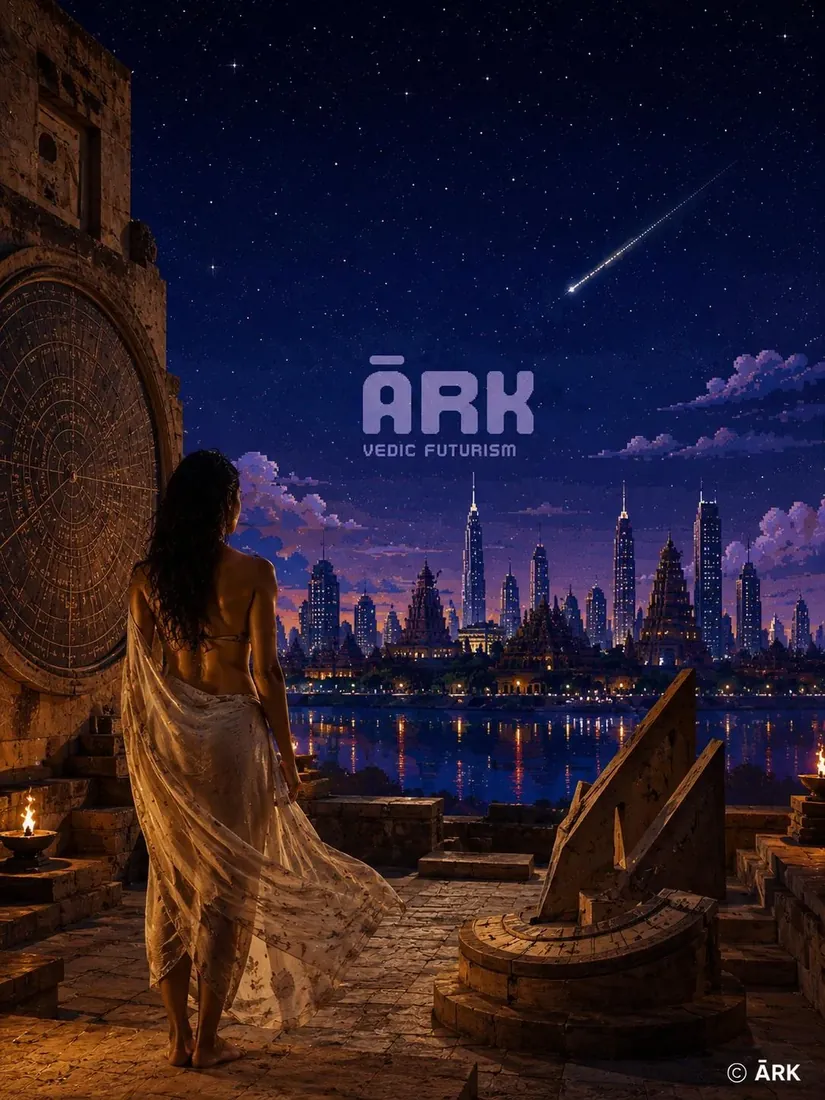
The eternal renders at low resolution
Commercial imagery draws the merchandise in high definition and leaves the infinite as fog. These pictures do the opposite. The wrench and the asphalt stay sharp. The sky, the clouds and the order behind them step into whole pixels, because the eternal does not depend on detail to be true.
On the site: things you operate are crisp. Things you contemplate step. Dividers, loaders, section marks and image transitions move in whole units; buttons and body text do not.
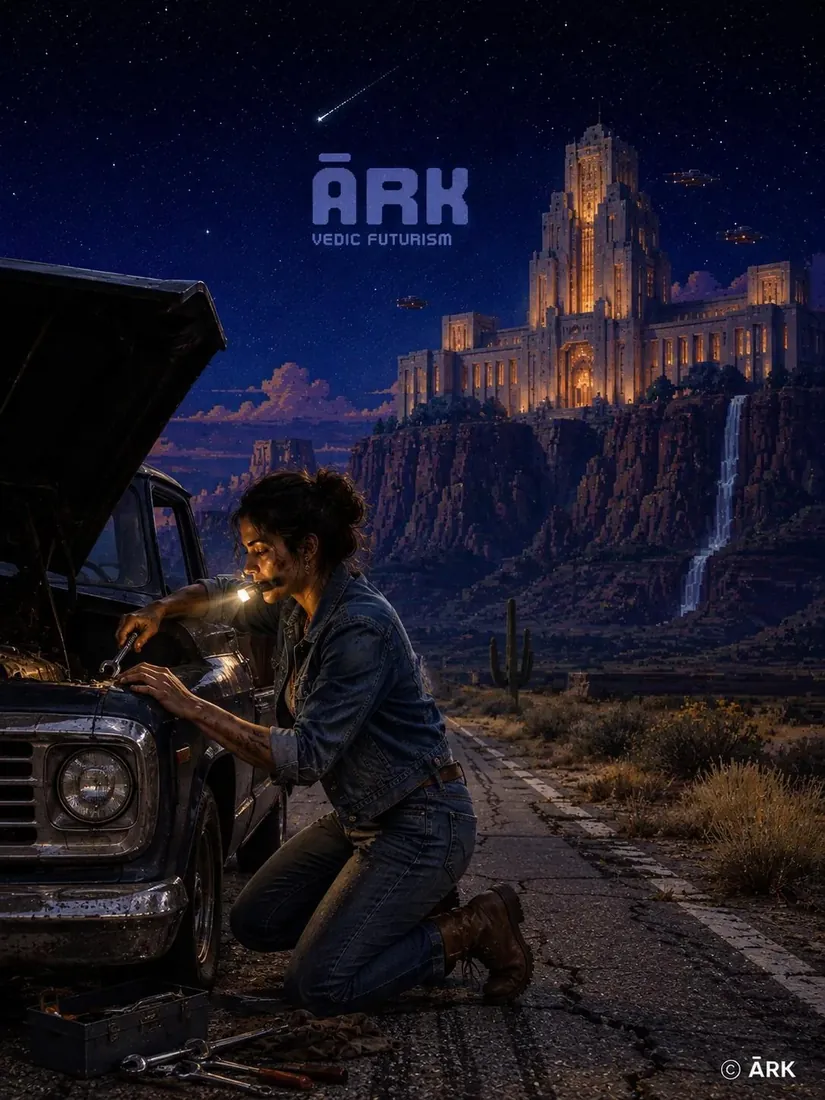
Grain binds the two resolutions
A single layer of grain runs across both, so the frame reads as one photograph rather than two techniques stacked. The ancient and the built are not separate worlds here, and they are not lit separately.
On the site: grain is one page-level layer, never per-component. One tile, one animation, above the content and below any dialog. It holds still when your device asks for less motion, and switches off in Paper mode.