Śrī Kṛṣṇa
श्रीकृष्ण
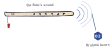
Speaker of the Gītā. Per Gītā 4.1, He first spoke this teaching to Vivasvān, the sun-god.
Bhagavad-gītā 4.1

Chronicle 001 · First edition
Thirty-two hands. One signal. No break.
Before the Vedas were a book, they were a sound, handed from teacher to student without a break. This is the chain ĀRK comes from, thirty-two hands from Śrī Kṛṣṇa to Śrīla Prabhupāda, every link shown with where it comes from. Walk it here, or take the whole chronicle with you.
The Relay · Brahma-Madhva-Gauḍīya line
“This supreme science was thus received through the chain of disciplic succession, and the saintly kings understood it in that way. But in course of time the succession was broken, and therefore the science as it is appears to be lost.”
Chapter 1 · 01–04
Speaker of the Gītā. Per Gītā 4.1, He first spoke this teaching to Vivasvān, the sun-god.
Bhagavad-gītā 4.1

Receives the Veda “in the heart” (tene brahma hṛdā).
Śrīmad-Bhāgavatam 1.1.1

Brahmā’s student. Instructs Vyāsa to compose the Bhāgavatam.
Śrīmad-Bhāgavatam 1.5
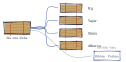
Arranges the Veda and compiles the Bhāgavatam. Vyāsa literally means “arranger”: the first editor.
Śrīmad-Bhāgavatam 1.7.6
Chapter 2 · 05–19

Founder of Tattvavāda. Wrote commentaries on the Gītā and the Vedānta-sūtra.
Standard histories of the Mādhva tradition
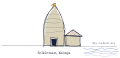
Narahari Tīrtha, a disciple of Madhva. Regent in the Eastern Gaṅga kingdom of Kalinga; spread Madhva’s philosophy there.
Narahari Tirtha, Wikipedia (Śrīkūrmam inscriptions)
Known as the Ṭīkācārya, “the commentator”. Author of the Nyāya-sudhā.
Standard histories of the Mādhva tradition
Rājaguru of the Vijayanagara court. Author of the Nyāyāmṛta.
Standard histories of the Mādhva tradition
Chapter 3 · 20–28

Called the first sprout of the tree of devotion.
Śrī Caitanya-caritāmṛta, Ādi 9.10
Initiates Śrī Caitanya at Gayā.
Śrī Caitanya-caritāmṛta, Ādi 17

Spent his last eighteen years in Purī. Wrote only eight verses, the Śikṣāṣṭaka.
Śrī Caitanya-caritāmṛta, Antya 20
Author of the Bhakti-rasāmṛta-sindhu.
Śrī Caitanya-caritāmṛta
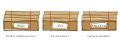
Jīva Gosvāmī: author of the Ṣaṭ-sandarbha.
Standard Gauḍīya histories
Author of the Śrī Caitanya-caritāmṛta.
Śrī Caitanya-caritāmṛta, colophons to each chapter

His songs: the Prārthanā and the Prema-bhakti-candrikā.
Standard Gauḍīya histories
Commentaries on the Bhāgavatam (Sārārtha-darśinī) and the Gītā (Sārārtha-varṣiṇī).
Standard Gauḍīya histories
Baladeva: author of the Govinda-bhāṣya on the Vedānta-sūtra.
Standard Gauḍīya histories
Chapter 4 · 29–32

A magistrate, posted at Purī, who wrote Jaiva-dharma (1896): invented characters, real philosophy. The precedent for ĀRK Books.
Standard biographies of Bhaktivinoda Ṭhākura

An astronomer who published the Sūrya-siddhānta with a Bengali translation. Called the printing press the bṛhad-mṛdaṅga, “the great drum”.
Standard biographies; Vaniquotes, “Surya-siddhanta”

Sailed from Calcutta on the Jaladuta in 1965, at 69, and reached Boston that September. Founded ISKCON in New York in 1966. Translator of the Gītā and the Bhāgavatam.
Standard biographies of Śrīla Prabhupāda
And the signal reaches you.
After Śrīla Prabhupāda, his great disciples transmitted this knowledge to us. Every verse on ĀRK has come down this same line.
Chapter 1 of 4 · 01–04
From the source to the first teachers. A teaching that begins in the sky.
Śrī Kṛṣṇa
श्रीकृष्ण
Speaker of the Gītā. Per Gītā 4.1, He first spoke this teaching to Vivasvān, the sun-god.
Bhagavad-gītā 4.1
Brahmā
ब्रह्मा
Receives the Veda “in the heart” (tene brahma hṛdā).
Śrīmad-Bhāgavatam 1.1.1
Nārada
नारद
Brahmā’s student. Instructs Vyāsa to compose the Bhāgavatam.
Śrīmad-Bhāgavatam 1.5
Vyāsa
व्यास
Arranges the Veda and compiles the Bhāgavatam. Vyāsa literally means “arranger”: the first editor.
Śrīmad-Bhāgavatam 1.7.6
Chapter 2 of 4 · 05–19
Udupi and the Karnataka coast, from the 13th century on.
Madhva
मध्व
Founder of Tattvavāda. Wrote commentaries on the Gītā and the Vedānta-sūtra.
Standard histories of the Mādhva traditionUnder review
Padmanābha
पद्मनाभ
Record being sourced from the texts. Not improvised.
Nṛhari
नृहरि
Narahari Tīrtha, a disciple of Madhva. Regent in the Eastern Gaṅga kingdom of Kalinga; spread Madhva’s philosophy there.
Narahari Tirtha, Wikipedia (Śrīkūrmam inscriptions)
Mādhava
माधव
Record being sourced from the texts. Not improvised.
Akṣobhya
अक्षोभ्य
Record being sourced from the texts. Not improvised.
Jayatīrtha
जयतीर्थ
Known as the Ṭīkācārya, “the commentator”. Author of the Nyāya-sudhā.
Standard histories of the Mādhva traditionUnder review
Jñānasindhu
ज्ञानसिन्धु
Record being sourced from the texts. Not improvised.
Dayānidhi
दयानिधि
Record being sourced from the texts. Not improvised.
Vidyānidhi
विद्यानिधि
Record being sourced from the texts. Not improvised.
Rājendra
राजेन्द्र
Record being sourced from the texts. Not improvised.
Jayadharma
जयधर्म
Record being sourced from the texts. Not improvised.
Puruṣottama
पुरुषोत्तम
Record being sourced from the texts. Not improvised.
Brahmaṇya Tīrtha
ब्रह्मण्यतीर्थ
Record being sourced from the texts. Not improvised.
Vyāsatīrtha
व्यासतीर्थ
Rājaguru of the Vijayanagara court. Author of the Nyāyāmṛta.
Standard histories of the Mādhva traditionUnder review
Lakṣmīpati
लक्ष्मीपति
Record being sourced from the texts. Not improvised.
Chapter 3 of 4 · 20–28
Bengal, Vṛndāvana, and the Odisha coast at Purī and Remuṇā.
Mādhavendra Purī
माधवेन्द्र पुरी
Called the first sprout of the tree of devotion.
Śrī Caitanya-caritāmṛta, Ādi 9.10
Īśvara Purī
ईश्वर पुरी
with Nityānanda, Advaita
Initiates Śrī Caitanya at Gayā.
Śrī Caitanya-caritāmṛta, Ādi 17
Śrī Caitanya Mahāprabhu
श्रीचैतन्य
Spent his last eighteen years in Purī. Wrote only eight verses, the Śikṣāṣṭaka.
Śrī Caitanya-caritāmṛta, Antya 20
Rūpa Gosvāmī
रूप गोस्वामी
with Svarūpa, Sanātana
Author of the Bhakti-rasāmṛta-sindhu.
Śrī Caitanya-caritāmṛtaUnder review
Raghunātha dāsa · Jīva Gosvāmī
रघुनाथ दास · जीव गोस्वामी
Jīva Gosvāmī: author of the Ṣaṭ-sandarbha.
Standard Gauḍīya historiesUnder review
Kṛṣṇadāsa Kavirāja
कृष्णदास कविराज
Author of the Śrī Caitanya-caritāmṛta.
Śrī Caitanya-caritāmṛta, colophons to each chapter
Narottama dāsa Ṭhākura
नरोत्तम दास ठाकुर
His songs: the Prārthanā and the Prema-bhakti-candrikā.
Standard Gauḍīya historiesUnder review
Viśvanātha Cakravartī Ṭhākura
विश्वनाथ चक्रवर्ती ठाकुर
Commentaries on the Bhāgavatam (Sārārtha-darśinī) and the Gītā (Sārārtha-varṣiṇī).
Standard Gauḍīya historiesUnder review
Jagannātha dāsa Bābājī
जगन्नाथ दास बाबाजी
with Baladeva Vidyābhūṣaṇa
Baladeva: author of the Govinda-bhāṣya on the Vedānta-sūtra.
Standard Gauḍīya historiesUnder review
Chapter 4 of 4 · 29–32
Calcutta, the printing press, and a cargo ship to Boston.
Bhaktivinoda Ṭhākura
भक्तिविनोद ठाकुर
A magistrate, posted at Purī, who wrote Jaiva-dharma (1896): invented characters, real philosophy. The precedent for ĀRK Books.
Standard biographies of Bhaktivinoda ṬhākuraUnder review
Gaurakiśora dāsa Bābājī
गौरकिशोर दास बाबाजी
Record being sourced from the texts. Not improvised.
Bhaktisiddhānta Sarasvatī Ṭhākura
भक्तिसिद्धान्त सरस्वती ठाकुर
An astronomer who published the Sūrya-siddhānta with a Bengali translation. Called the printing press the bṛhad-mṛdaṅga, “the great drum”.
Standard biographies; Vaniquotes, “Surya-siddhanta”Under review
A. C. Bhaktivedanta Swami Prabhupāda
भक्तिवेदान्त स्वामी प्रभुपाद
Sailed from Calcutta on the Jaladuta in 1965, at 69, and reached Boston that September. Founded ISKCON in New York in 1966. Translator of the Gītā and the Bhāgavatam.
Standard biographies of Śrīla PrabhupādaUnder review
After station 32
After Śrīla Prabhupāda, his great disciples transmitted this knowledge to us. Every verse on ĀRK has come down this same line.
The printed chronicle
Forty-eight pages: the Gītā’s own account, every station with its record, the initiation links, the Bhāgavatam’s chain, and eight things to do, from a crossword to tracing the route. It does not mention this website once: it stands on its own.
5The First Transmission
10The Map of the Relay
12Brahmā Hears
18Madhva Meets Vyāsa
31Thirty-Five Days at Sea
40The Relay Crossword
On YouTube
Free · two editions · first edition
First edition. Later editions will add records as they are sourced; nothing is added before it can be checked.
Verse texts and translations as published on vedabase.io. Translations of the Bhagavad-gītā and Śrīmad-Bhāgavatam: A. C. Bhaktivedanta Swami Prabhupāda · © The Bhaktivedanta Book Trust International.
© 2026 Āroha Omnis Corp. All rights reserved. ĀRK, the ĀRK robot and the ĀRK crest are the property of Āroha Omnis Corp.

